Measure psychosocial risk and act on it early
A weekly pulse of about 60 seconds, quarterly validated instruments, team-level trends, and a register with named owners.
Measurement people will actually do.
About 60 seconds, on the phone already in their pocket. Nothing to install: they sign in with a link sent to their email.
Asked weekly, about the week just worked. Ask someone in November how March felt and you get a story. Ask them on Friday about the five days behind them and you get a signal.
Weekly scores build a trend, so you can see whether a change you made moved it.
Workers see their own trend, so the check-in gives something back.
The weekly pulse takes about 60 seconds; the full instruments run less often, quarterly and twice a year.
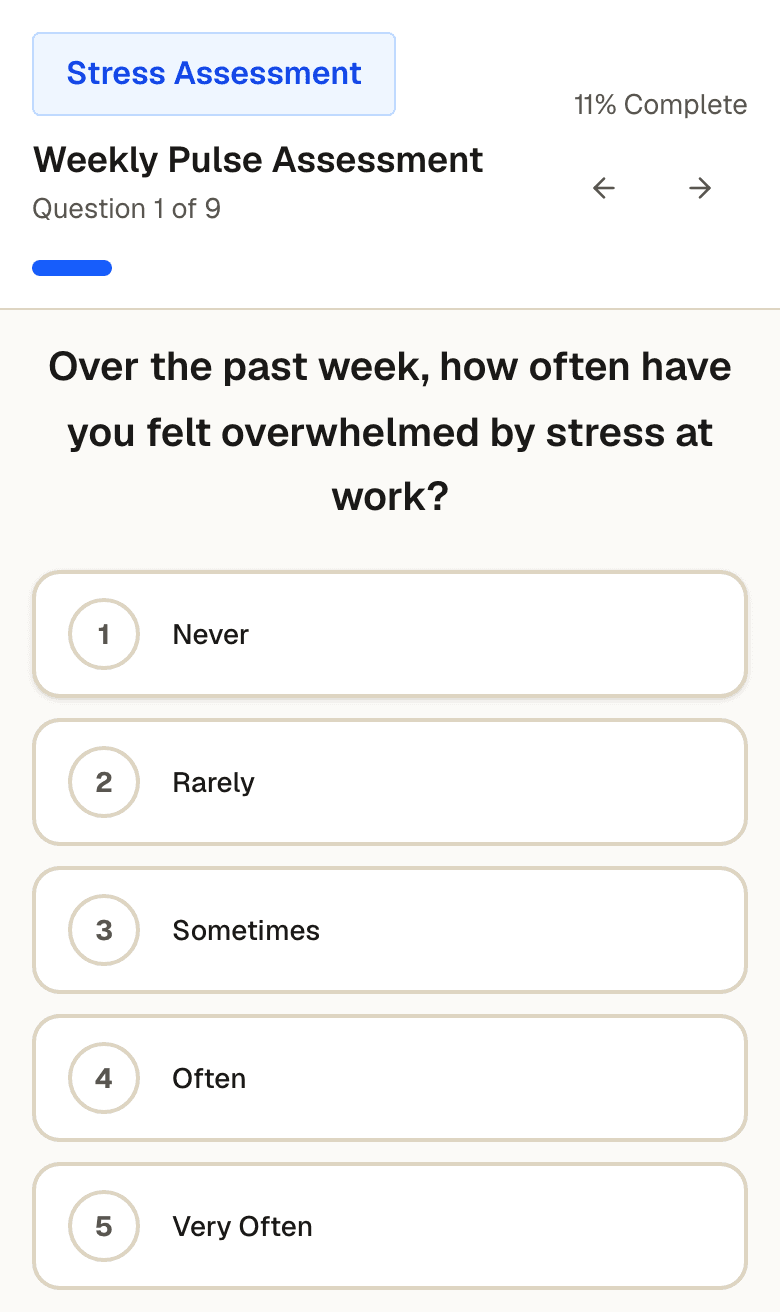
How the platform follows the four steps
Identify
Workers can also write feedback and tag the hazard it relates to. The tag maps to a Safe Work Australia hazard and starts an entry in the register.
Assess
Results show by team, over time, once at least 10 people have answered. Each hazard in the register carries a likelihood and consequence rating.
Control
Each control is recorded in hierarchy order, with a named owner and a review date.
Review
Every change to the register is written to an audit trail in the same database transaction as the change.
Published, peer-reviewed instruments
Measurement runs on published, peer-reviewed instruments. Both are named below, with their primary references.
BAT-23Burnout Assessment Tool
Twenty-three items across four dimensions: exhaustion, mental distance, cognitive impairment and emotional impairment. Developed by Schaufeli, Desart and De Witte and published in 2020; national versions and validation studies span around 20 countries, across around 40 published studies.
COPSOQ IIICopenhagen Psychosocial Questionnaire
The third version of the international standard instrument for psychosocial factors at work, developed and maintained by the COPSOQ International Network. Its development study spanned 23,361 employees across six countries, and the questionnaire is available in more than 25 languages.
The instruments are validated. The platform administers them.
World Health Organization. The World Health Organization-Five Well-Being Index (WHO-5). Geneva: World Health Organization; 2024. Licence: CC BY-NC-SA 3.0 IGO.
The World Health Organization does not endorse any specific companies, products or services.
Team-level patterns
Team-level trends and early-warning signals, shown once at least 10 people have answered. The trends never show an individual.
Workers see their own trends. Team leads see the crew’s trends, once at least 10 people have responded. Leaders see the organisation: aggregated, threshold-gated and exportable.
Each hazard in the register carries a likelihood and consequence rating. The platform also measures whether workers can get support when they need it, in aggregate only.
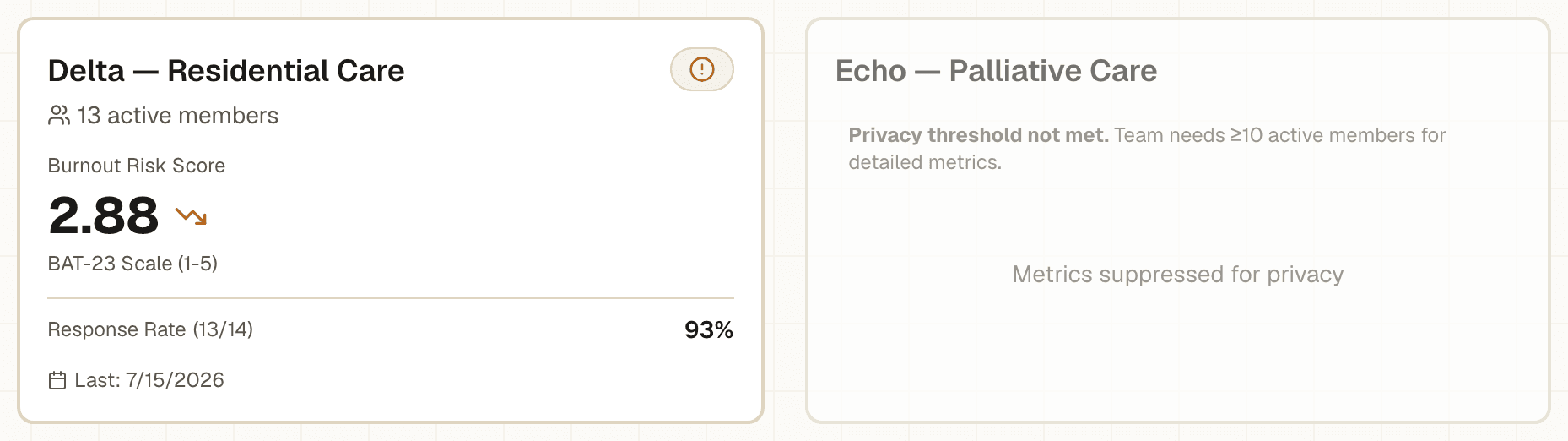
What good controls protect
Hazard results show where work is putting people at risk. The WHO-5 Well-Being Index shows how they are doing overall: five questions about the past two weeks, asked each quarter. Its results show by team, beside the burnout results, under the same floor of 10.
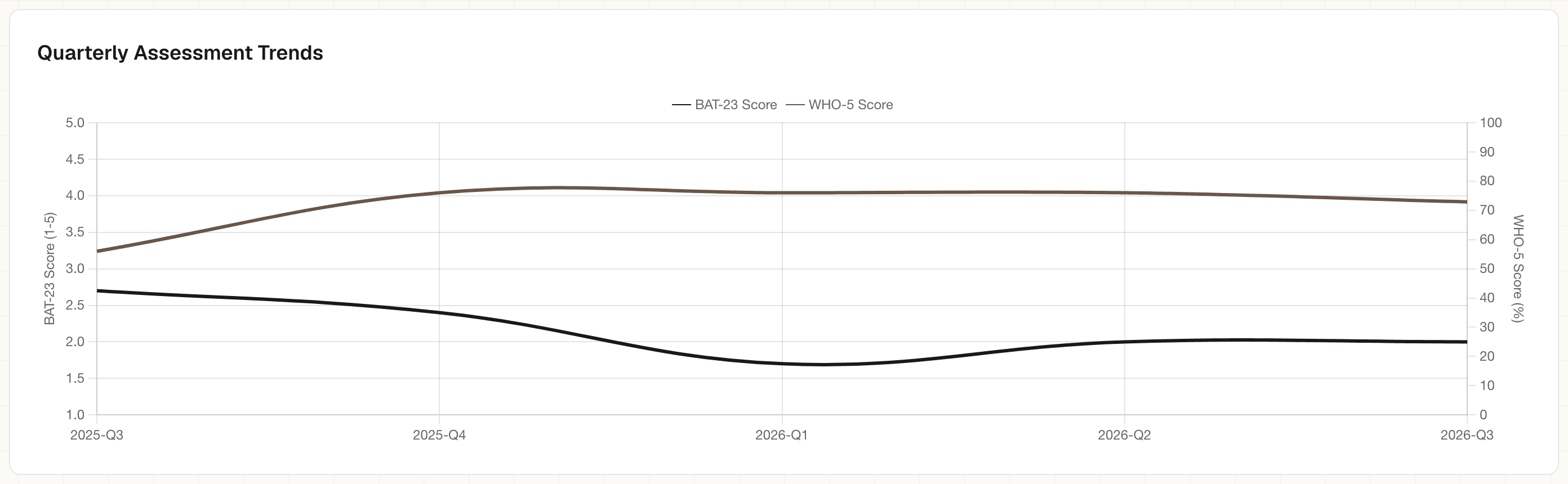
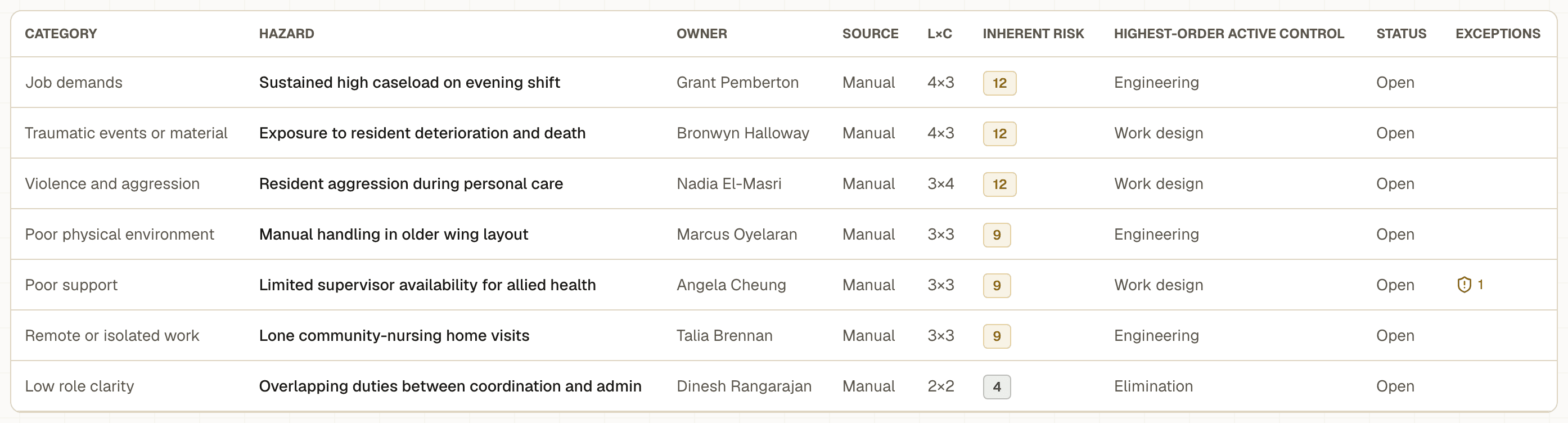
Evidence a WHS officer can read.
The register a WHS officer can read: hazards, controls in hierarchy order, and a named owner against each one. We show the evidence; your organisation makes the judgement.
A minimum group of 10 that can’t be reconfigured.
Team-level data appears only once at least 10 people have responded. The floor of 10 protects the people answering, since small groups are easy to identify.
Encrypted, stored in Sydney
All data, including written feedback, is encrypted at rest and stored in Sydney.
Confidential feedback
Written feedback is confidential. Leaders read it without names, and only where at least 10 people have answered. A worker can also choose to contact a named lead.
Retention and deletion
Retention and deletion follow the privacy policy. When an organisation's engagement ends, we delete the personal information we hold about its workers and administrators, and verify the deletion, within 90 days. Before the end date the organisation can export its hazard register and team results.
De-identified aggregates
De-identified aggregates, always suppressed below the privacy floor, are retained for benchmarking.
Fits how your team already works.
A Slack integration for teams that live there, reminders by email, and sign-in by magic link or email. Nothing new for your people to learn.
The platform, feature by feature.
Weekly pulse
About 60 seconds, once a week.
Aggregation
Team-level insight once at least 10 people have answered. Team views never show an individual.
Confidential feedback
Written feedback is confidential. Leaders read it without names, and only where at least 10 people have answered. A worker can also choose to contact a named lead.
Privacy by architecture
The floor of 10 protects the people answering. Small groups are easy to identify, so we don't show them.
Retention and deletion
Your data stays yours. When an organisation's engagement ends, we delete the personal information we hold about its workers and administrators, and verify the deletion, within 90 days. Before the end date the organisation can export its hazard register and team results.
Integrations
A Slack integration, and email.
EAP signposting
Surfaces your organisation's own EAP details to workers; care pathways stay yours, and Plus Ultra never provides care itself.
Audit-ready exports
Hazards, controls in hierarchy order, and a named owner against each one.