The duty is the same. The work isn’t.
Psychosocial risk on a night shift looks nothing like it does at a desk. The system adapts — the same validated instruments and the same privacy floor, read against the risks your workforce actually faces.
Underneath both: the same weekly pulse, the same team-level trends, the same register.
Frontline and shift work.
Deskless, rostered and hard to reach. The strain here sits close to physical safety, and it compounds on the roster.
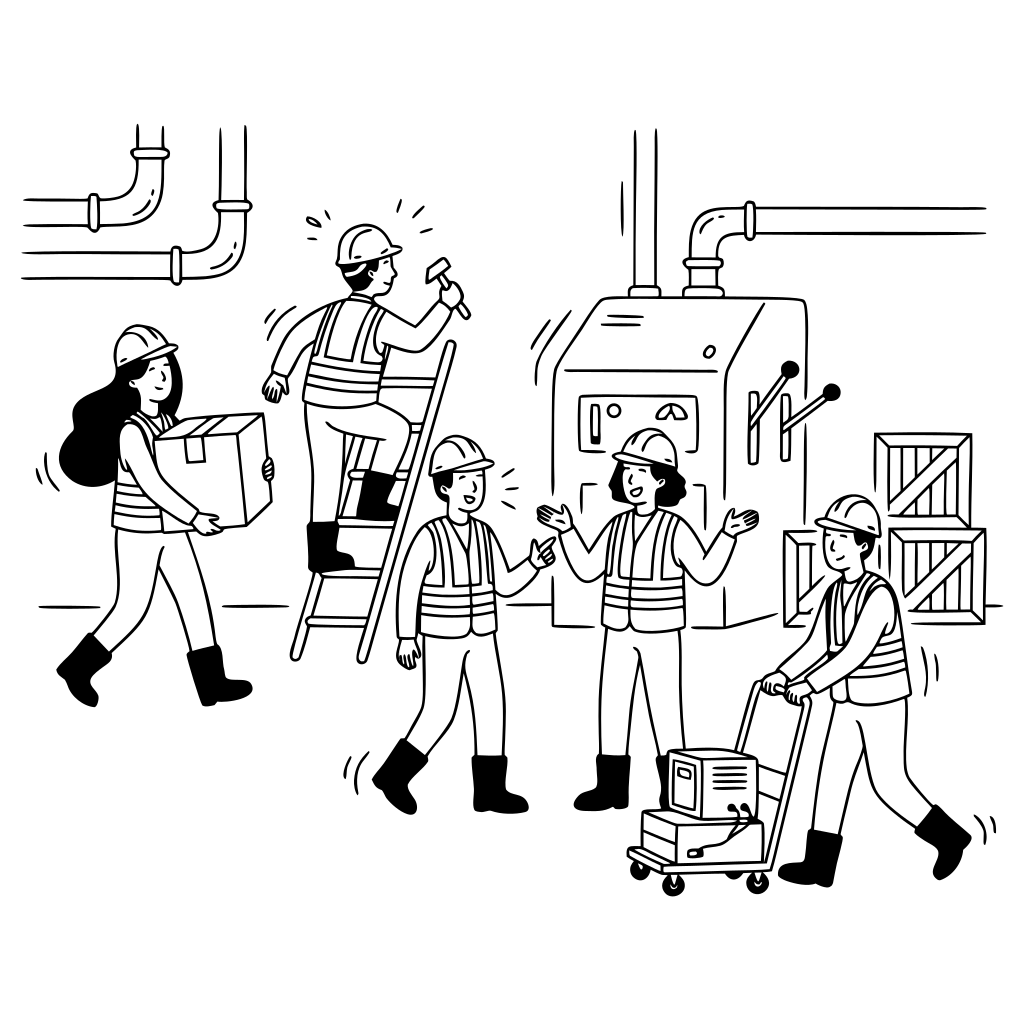
Frontline work carries its own strain.
- Fatigue and shift load
- Long shifts, night work and short turnarounds wear people down before anyone says a word.
- Exposure to distressing situations
- Frontline roles meet illness, injury, aggression and loss as part of the job.
- Isolation from support
- Spread across sites, vehicles and shifts, people are often far from a manager or a peer when it matters.
- A hard-to-reach workforce
- No desk, no company email, no spare ten minutes; most tools never reach these teams at all.
Built for people without a desk.
- Built frontline-first for deskless workforces — short check-ins that fit a handover or a crib room, on a shared tablet or a personal phone, no app install.
- A cadence the team sets — weekly, or a shorter monthly form when the roster is tight.
- Team-level insight, never the individual — the pattern shows before the resignation does.
- Audit-ready evidence for the WHS duty — the same trail, whatever the sector.
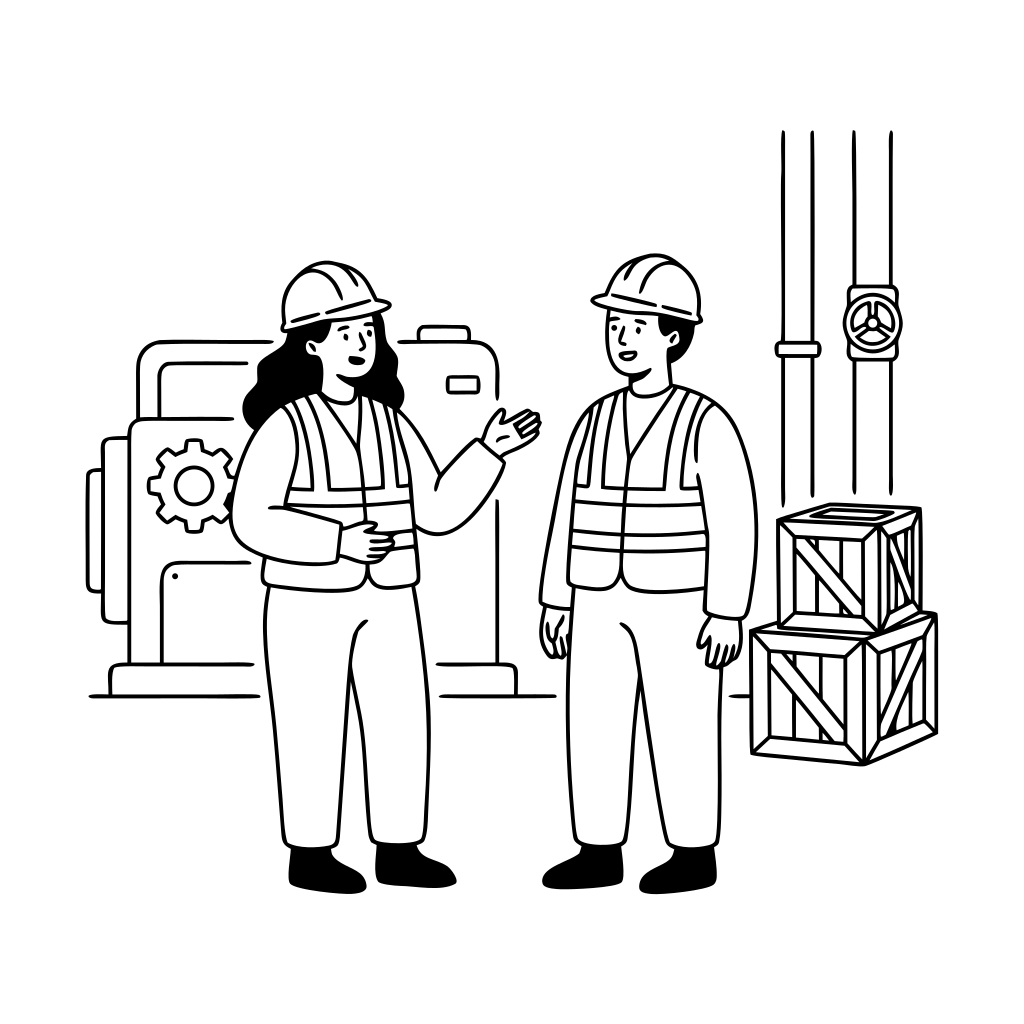
Office and knowledge work.
Desk-based and always-on. The strain here is quieter, but the duty is identical.

Desk work carries a quieter strain.
- Burnout from sustained overload
- High output held for months at a time, with recovery deferred indefinitely.
- Blurred boundaries
- Laptops and phones keep the workday open long after it should have closed.
- Psychological safety within teams
- Whether people can raise a problem, or own a mistake, without it counting against them.
- High-autonomy, high-pressure roles
- Freedom over the work, and the full weight of owning the outcome.
Built for the always-on workday.
- The same validated instruments, reading a different risk profile — overload and team safety, not shift strain.
- The same minimum group of 10, enforced in the database — honest patterns, never the individual.
- Team-level trends leaders can act on early — before overload becomes the norm.
- Evidence for the same duty — the psychosocial obligation doesn’t stop at the office door.
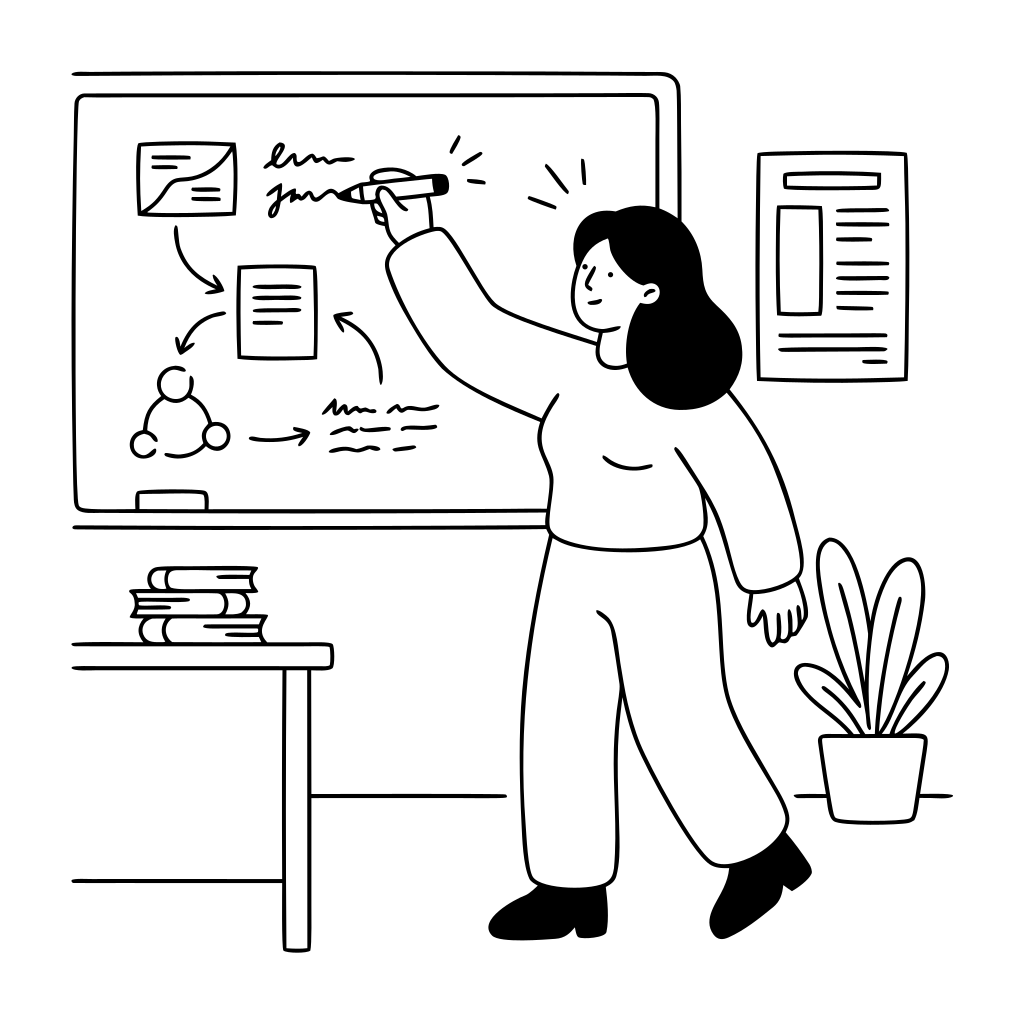
Where the duty runs to someone else.
In education and aged care the duty of care runs to a third party who cannot advocate for themselves — a child, a resident. An educator or carer holding unmanaged psychosocial load is a safeguarding question, not a culture question. That is a different situation from manufacturing or professional services, and it is the honest reason these sectors need this first.
Preschools and early learning centres are the sharpest version: severe psychosocial load on educators, high turnover, ratio-driven staffing, thin margins — and almost no psychosocial infrastructure available at that price point.
Different work. The same engine.
Whichever context you’re in, the measurement underneath is identical — that’s what makes the evidence defensible.
Same validated instruments
BAT-23, WHO-5 and COPSOQ III, published and peer-reviewed.
Same minimum group of 10
Team-level data appears only once at least 10 people have responded — the floor of 10 protects the people answering, since small groups are easy to identify.
Same privacy architecture
Free-text feedback is confidential: counted anonymously, or sent to a manager you choose — never both by accident, and never a surprise. Encrypted at rest, with Australian data residency.
Same audit-ready evidence
Hazards, controls in hierarchy order, and a named owner against each one — an export a WHS officer can read.